How to Get More from a Club Open Day
A club open day is more than a practice visit: use its demonstrations, sign-ups, and event schedule to compare activities and choose a useful next step.
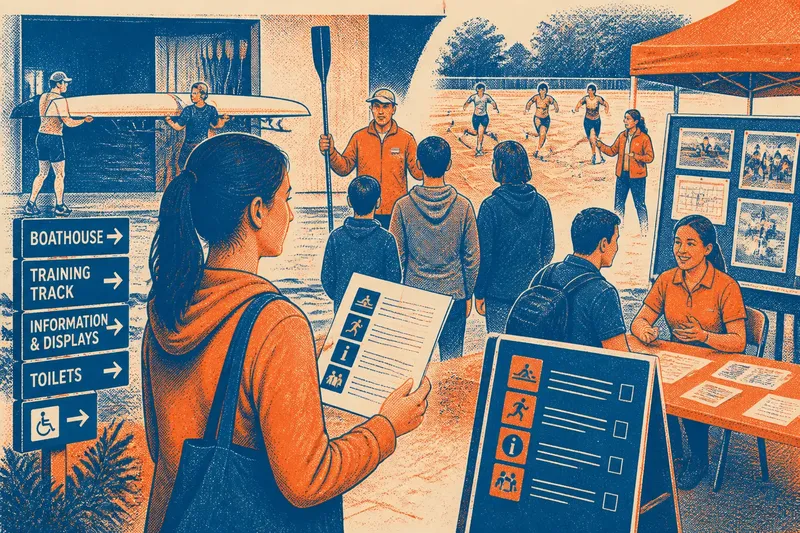
At a club open day, the schedule itself can tell you what to explore: demonstrations, try-it sessions, displays, and volunteer tables offer different ways into the sport. A club open day is not simply a regular practice with extra visitors; use the event format to compare options and see what might suit you.
How is an open day different from a regular session?
An open day is built to introduce the club, so it may include several activities in short blocks, people assigned to greet visitors, and information about ways to participate beyond playing. That makes it useful for comparing the club’s offerings, but it may not show the pace or routine of an ordinary practice.
Look at the event schedule as a menu rather than a contract. A rowing club might offer a boat-handling demonstration, a tour of its equipment area, and a table about volunteering. At a community athletics club, the program might include a short skills display, a walk around the track, and information about different age or ability groups.
Choose one or two parts that answer your actual question. If you want to understand the activity, a demonstration may help. If you are curious about access or participation, a guided tour or information table may be more useful than trying to catch every event.
What can demonstrations and try-it sessions tell you?
A demonstration lets you see the activity without needing to join in. Watch how the presenter explains equipment and movement, and note which parts are described as suitable for beginners. If a try-it session is offered, ask what visitors should wear, whether equipment is supplied, and whether you can watch before deciding.
Displays can answer questions that are easy to miss during play. A club may show photographs, maps, equipment, or a seasonal calendar. Ask what is current and what is only an example; an event display may include past activities that are not part of the regular program.
Open days also reveal the club’s broader work. A volunteer table may explain roles such as setting up equipment, helping with events, or supporting junior sessions. You can ask what each role involves without implying that you are ready to take one on.
Which open-day details should shape your choice?
Use the event’s concrete features to decide what to explore next. For each item below, check the observation and follow the matching decision:
- Check the published schedule for an activity that matches your interest; if one is listed, plan to attend that segment, but if none is listed, ask whether the club can suggest another visit.
- Check whether a demonstration explains beginner participation; if it does, note the route it describes, but if it does not, ask a host how a newcomer can learn the basics.
- Check whether a try-it activity states clothing or equipment expectations; if the requirements are clear and suitable, consider taking part, but if they are unclear, observe and ask before joining.
- Check whether an information table distinguishes current sessions from special event activities; if it does, compare the regular options, but if not, ask which details apply beyond the open day.
- Check whether the venue map or signs show visitor entry and accessible routes; if the route is clear, use it, but if it is not, ask an event volunteer for directions before moving through activity areas.
- Check whether the event lists a contact for follow-up; if it does, save the name or contact method, but if it does not, ask where the club publishes its public contact information.
These details help distinguish an appealing event from an activity you might want to revisit. Like comparing dishes at a tasting table, you can sample what is offered without deciding that every option belongs on your regular menu.
How can you ask useful questions during a busy event?
Hosts may be demonstrating, directing visitors, or answering several people at once. Keep your question specific and easy to answer: “Which session is meant for a beginner?” or “Is this demonstration part of a regular activity?” If the person is occupied, ask when or where to follow up rather than trying to hold the conversation.
It can help to separate questions into three kinds:
- About the activity: Ask what a first session involves and whether visitors can observe before participating.
- About the event: Ask whether a demonstration is repeated or whether a handout lists the activities on offer.
- About participation: Ask who handles questions about joining, volunteering, or accessible arrangements.
Say you arrive at a community tennis club’s open day with a fictional plan to compare its beginner session and volunteer opportunities. You read the posted schedule, which lists a court demonstration and a volunteer information table, then watch the demonstration and ask whether it reflects a regular session. The host says the beginner group meets separately and points you to its public contact; you visit the table, learn that event help is optional, and leave with the contact details. Your resulting choice is clear: ask about observing the beginner group, while setting aside volunteering until you know more.
What should you ask after the open day?
Can I judge a club from its open day?
You can learn what the club chooses to present, but event activities may differ from a regular session. If the event interests you, ask when you can observe the activity in its usual setting; if it does not, you can leave without treating the visit as a verdict.
Should I sign up for a try-it session?
Only if you want to and understand what participation involves. Ask about clothing, equipment, and any instructions first; if the information is unclear or you would rather watch, stay with the demonstration.
What if the open day is too busy for questions?
Look for a program, contact card, or public club email address. If none is available, ask a volunteer where the club posts follow-up information, then send one concise question later.
How do I choose what to do next?
Use the event to identify one unanswered question, such as which session welcomes beginners or whether an activity can be observed. If you have a relevant contact, ask that question; if not, check the club’s public schedule or contact channel.
How can you leave with a useful next step?
Before leaving, note the name of one activity that interested you, one detail you learned, and one question still open. For a club open day, the most useful next step may be checking a regular-session time, contacting the person named at the event, or simply keeping the information for later. Choose what fits your interest rather than accepting an invitation out of politeness.
Keep event impressions distinct from what you know about ordinary participation. “The club offered a beginner demonstration” is a concrete observation; “I know what every practice is like” would go further than an open day can support. That small distinction helps you decide whether another visit would add something worthwhile.
When you use the schedule, demonstrations, and information tables for their particular purpose, an open day becomes easier to read. You can compare what the club offers, find the right person for a follow-up question, and leave with a next step that remains entirely yours.