The Catch-Up Session Is Not a Reset Button
Catch-up practice can turn a missed session into a backlog. Learn how to return to suitable club training without making exercise feel like a debt.

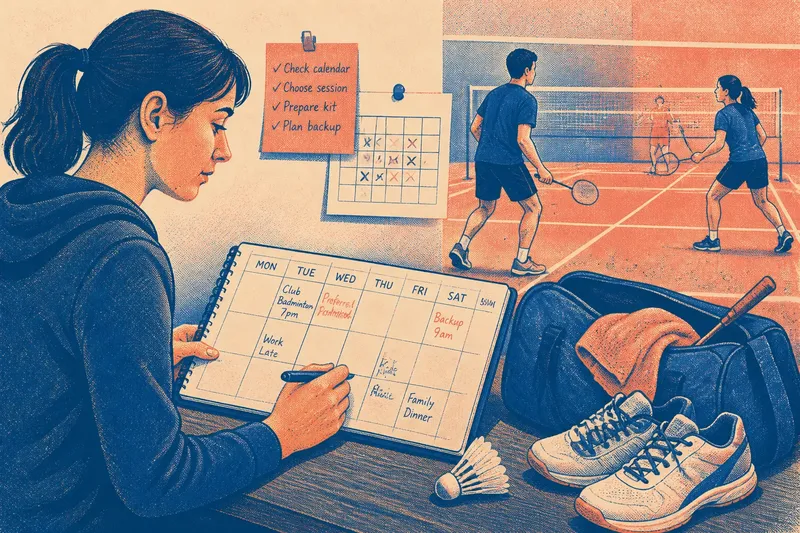
You miss Tuesday’s badminton practice, and by Wednesday the empty slot feels like a debt: surely you should add an extra session before joining the group again. Catch-up practice often creates more pressure than progress. In amateur sport, a missed session is usually a gap in the routine, not an assignment waiting to be completed.
The useful question is not how to repay the time. It is what the next suitable opportunity looks like, given your energy, schedule and the club’s practice plan. Treat the return as a fresh point of contact with the activity, not a reset button that must be earned.
Why does one missed practice start to feel like a backlog?
Regular sessions provide a rhythm: you see familiar people, work on a skill, and know roughly what comes next. Missing one can interrupt that rhythm. The mind may fill the gap with a tidy but unhelpful rule: every session missed must be replaced by an extra one.
That rule can come from enthusiasm, not laziness. You care about improving and do not want to lose ground. But practice is not a punch card. An added session may not match the group’s focus, and a rushed attempt to “make up” attendance can leave you less ready to take part in the next planned practice.
Think of a club schedule like a shared table: arriving late to one meal does not mean you must eat two dinners before sitting down again. The next meal is still there. In the same way, the next suitable practice is often the clearest place to resume.
What if the missed session covered something important?
It can be unsettling to imagine the group moving ahead while you were away. In a sport with linked skills, you may worry that you have missed a drill, a tactical explanation or a change in how the group is organizing play.
First, find out what actually happened rather than filling in the blanks yourself. Ask the coach or a teammate for the main focus and whether it affects what you should do next. A brief note may be enough; you do not necessarily need a private replay of the whole session.
If the missed work was a specific building block, ask whether the coach recommends a simple way to reconnect with it during the next practice. The answer might be a short reminder, a partner drill, or simply joining the regular activity and asking questions as they arise. Let the coach decide whether anything needs extra attention.
Say you miss a volleyball practice where the group worked on serve-receive positions. Before the next session, you message a teammate to ask what the coach wants returning players to know. They share the basic rotation note, and you arrive ready to check your position with the coach before the drill begins. That gives you a practical bridge without scheduling a second practice as repayment.
Why can an extra session make the return harder?
An extra session sounds like a neat solution because it puts activity back on the calendar. But it can compete with rest, work, family responsibilities or the next regular practice. It may also be a poor match for the reason you missed the original session.
If you were away because of a busy week, adding another commitment may make the week even tighter. If you were unwell, injured or unusually tired, trying to compensate with extra exertion may be the wrong call. For a health concern or injury, seek advice from an appropriate qualified professional, and follow the coach’s guidance about taking part.
There is also a social cost to treating every absence as a debt. You can begin to feel that you must explain yourself or arrive overprepared before you are welcome back. Club practice is a shared activity, not a private attendance ledger. A straightforward return is often kinder to you and easier for the group.
How can you choose the next suitable opportunity?
Look at the next session that fits both the club’s schedule and your current readiness. “Suitable” does not have to mean perfect. It means a session you can attend without creating a fresh problem, and where you can rejoin the group with reasonable guidance.
- Check your current condition. If you are still recovering or have a concern about pain, pause and get appropriate advice rather than adding effort to catch up.
- Check the practice focus. Ask whether the next session is open to everyone or depends on a skill or briefing you missed.
- Check the group’s expectations. A quick message to the coach can clarify whether to arrive early, bring anything different or simply join the normal warm-up.
- Choose one clear action. For example, plan to attend the next regular practice and ask one question about the session you missed.
- Leave the repayment idea aside. Do not add a session solely to erase the feeling of having been absent.
These checks are not a test you have to pass. They help separate a real practical need from the uncomfortable sense that you owe the club extra effort.
What if you keep missing the same kind of session?
A recurring absence is different from a single gap. It may point to a clash between the club’s timetable and your other commitments, or to a session format that does not fit your current needs. The answer still need not be a growing stack of extra practices.
Notice the pattern without turning it into a verdict about your commitment. Are you regularly away on the same work night? Does travel make a particular session difficult? Is there another suitable group session, a skills clinic or an occasional open practice that the club offers? Ask a coach or organizer what options exist, then choose one that you can realistically keep.
If no alternative fits, it may help to adjust what you expect from your participation for a while. You might focus on enjoying the sessions you can attend, rather than measuring progress against a schedule you cannot follow. That is a more useful conversation than quietly accumulating obligations you never agreed to.
What should you say when you come back?
You do not need a long explanation. A simple greeting and a practical question are enough: “I missed last practice. What should I know before we start?” If the absence involved an injury or other relevant limitation, tell the coach what they need to know to guide your participation.
Then take part at the level that makes sense for that day. You may need a reminder, a slower first drill or a moment to watch how the group is organized. Asking for that support is not asking the club to recreate the missed session; it is a normal way to rejoin shared practice.
What if you have questions about missed practice?
Should I practice alone before returning to the club?
Only if it fits your needs and the coach’s advice; an extra solo session is not a required payment for being absent. If you are unsure whether a skill needs refreshing, ask the coach what would be useful.
Will I lose progress after missing one session?
A single absence does not tell you what you can or cannot do next. Rejoin the next suitable practice, notice what feels familiar or rusty, and ask for guidance where needed.
What if the next session is not suitable for me?
Ask the coach or organizer when the next appropriate opportunity is, rather than forcing a return to a session that does not fit. If health or injury is involved, get qualified advice before resuming exertion.
Do I need to explain why I was away?
Share only what is relevant to your participation and any safety or coaching needs. For an ordinary scheduling conflict, a brief “I couldn’t make it” is enough.
When you miss practice, the next suitable session is not a reward for clearing a backlog. It is simply the next place to begin again. In a club routine, that small shift keeps participation grounded in what you can do now, rather than in sessions you cannot go back and attend.